Rethinking what regulation makes possible.
The Signal Newsletter | Issue 003
The Signal
In the last issue, we explored awareness.
That moment when something automatic becomes visible.
But I've been learning that noticing what's happening and having the capacity to respond differently aren't always the same thing.
That's where regulation enters the conversation.
Or, in language I find a little more human:
Your Inner Chill.
For a long time, I associated regulation with calm.
If I was relaxed, I was regulated.
If I was stressed, I wasn't.
I'm beginning to see it differently.
Inner Chill isn't about being calm all the time. It's less about maintaining a state of perfect calm and more about creating inner capacity.
Life can still be happening around me, and within me, without requiring all of me.
Because activation requires something from us.
When I'm replaying a conversation, anticipating what might happen, holding tension in my body, or trying to control an outcome that hasn't happened yet, part of me is occupied.
That requires attention, energy, and focus.
Regulation doesn't remove whatever activated me. But as my system begins to settle, the situation can require a little less of me.
And when something requires less of me, space begins to appear.
A little space between the feeling and what I do with it.
Between the thought and whether I believe it.
Between the impulse and what I choose next.
In that space, I can hear myself a little more clearly.
I can notice what the moment actually needs instead of immediately reacting to what I'm feeling.
Maybe that's what we're creating when we find our Inner Chill.
A little more space inside the experience.
Enough space to notice.
Enough space to discern.
Enough space to choose what happens next.
Not because the activation disappeared.
Because it stopped requiring all of us.
And what becomes available can be spent on living.
Meditation can help us find that space. So can breathwork, movement, music, journaling, connection, creativity, or just stepping outside.
And sometimes regulation doesn't look like a practice at all.
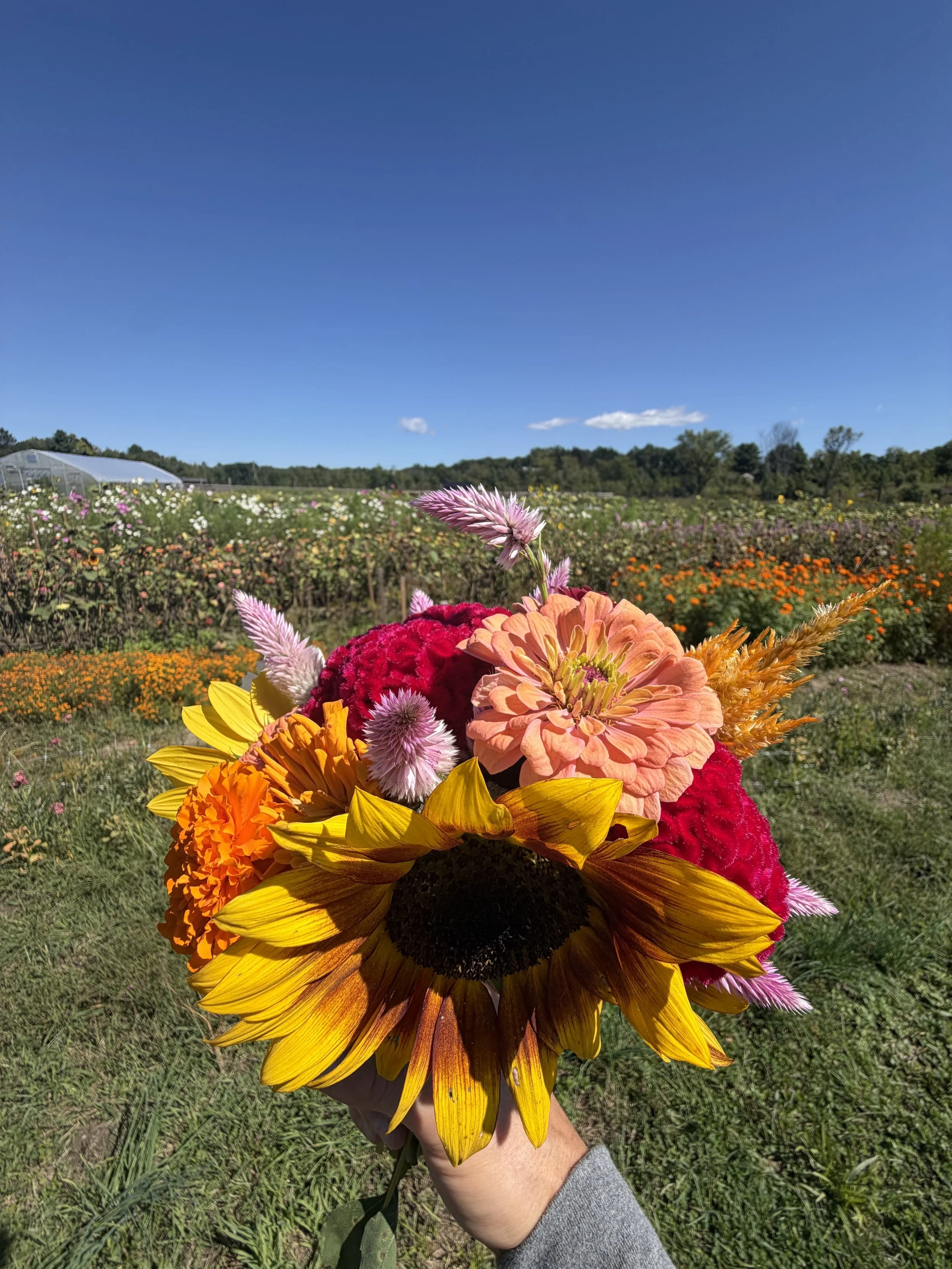
Last week, while on vacation, I found myself walking slowly through a field of flowers.
I noticed the colors. The shapes. The textures. Whatever caught my attention.
I wasn't trying to regulate my nervous system.
I was simply there.
And somehow, I had found my Inner Chill anyway.
More of me was available for the experience I was having.
My attention wasn't somewhere else trying to solve, predict, manage, or accomplish something.
It was available for what was right in front of me.
Maybe that's worth remembering. (note to self)
We don't create capacity only so we can handle difficult things better.
We create capacity so we can be more available for the good things too.
For a difficult conversation, that capacity might become discernment.
For creative work, curiosity.
With someone we love, attention.
In a field of flowers, presence.
At dinner, laughter.
Different moments ask for different things from us.
What interests me is whether I have enough of myself available to meet them.
Does this help a little more of me become available for my life?
The Practice
Find Your Inner Chill
Your Inner Chill might be meditation.
It might be a walk.
Music. Movement. Cooking. A few intentional breaths. Time outside with your dog. Making something. Talking with someone you love.
It doesn't need to look like sitting in the lotus position.
Choose something that tends to bring you into the present and give yourself a few minutes with it without trying to accomplish anything.
Then get curious:
Where is my attention now?
What requires less of me than it did a few minutes ago?
What feels more available?
You don't need to feel completely calm.
You're simply noticing whether a little more of you has become available.
Just begin noticing what brings you back.
Walking The Signal
I've noticed something about myself when I find a practice that helps me feel good.
I want to keep doing it.
Meditation. Walking. Breathwork. Movement. Sleep routines.
Consistency can be supportive. But somewhere along the way, I can start becoming attached to maintaining it.
I don't just enjoy the rhythm.
I start protecting the rhythm.
Then travel happens. A late dinner. A missed meditation. A workout that doesn't happen. A morning routine that disappears on vacation.
And I've started to recognize the irony:
I can become dysregulated trying to stay perfectly regulated.
I'm learning to hold these practices a little differently.
Life is going to pull me out of rhythm sometimes. That's part of participating in it.
Maybe the measure of a supportive practice isn't whether I can maintain it perfectly. Maybe it's whether I've developed enough of a relationship with it to know I can come back.
I'm becoming more interested in the return than the streak.
A missed day doesn't have to become a story. An interruption doesn't mean I've lost something.
I can simply return.
And every time I do, I create a little more evidence that I know how to find my way back.
Maybe that's the kind of regulation I mean when I talk about Inner Chill.
It's allowing the practices to support my life without needing my life to perfectly support the practices.
And when life inevitably interrupts the rhythm?
I trust the return.
Maybe Inner Chill isn't something I have to hold onto.
It's something I know how to come back to.
The Current Question
What would you do with the capacity you've created?
Thank you for reading.
If this resonated with you, consider sharing it with someone who may be asking similar questions.
Until next time, may you notice the signal, trust what you find, and take the next aligned step.
Michael
Additional Reading
Keep following the thread through these previous essays and newsletters.